
Testing Promata TPMS Sensors with Redback Racing
HB
Harmony Boonaerts • May 11, 2026
Harmony Boonaerts • May 11, 2026
Promata is a global manufacturer of aftermarket TPMS solutions for 4WDs, caravans, trucks, and road trains, with over 15 years in the Australian market and strong partnerships with Supercheap Auto, Repco, and GPC Asia Pacific. Their award-winning Mata 1 system has earned recognition from CHOICE, and in 2025 they partnered with UNSW Redback Racing to explore its performance in motorsport conditions.
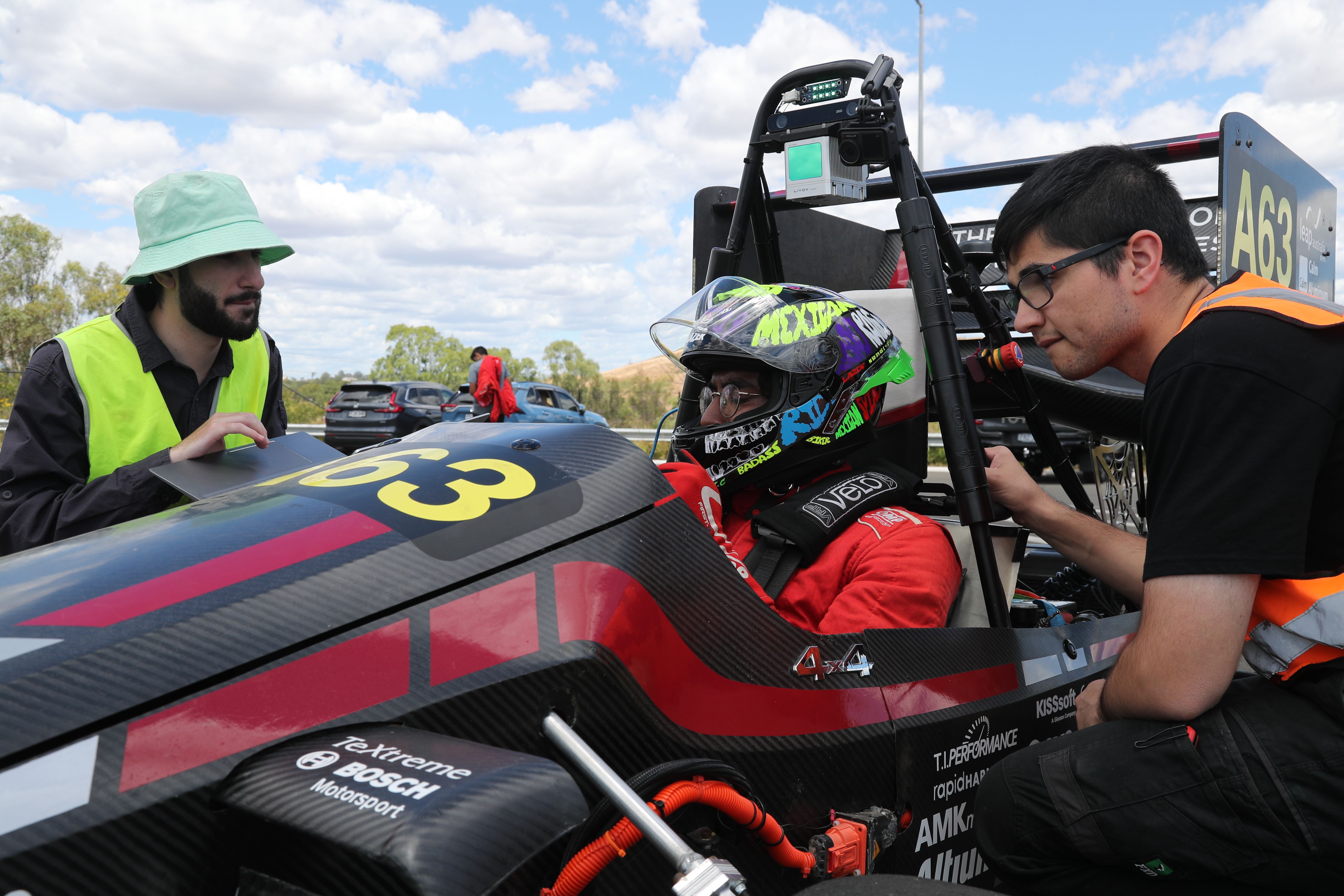
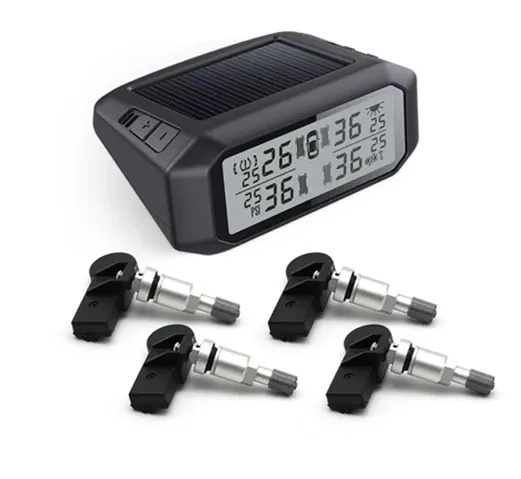
Following the manufacturing of RB25, our 2025 hybrid, electric and autonomous challenger, Promata supplied Redback Racing with its Mata 1 Tyre Pressure Monitoring System (TPMS) Sensor Set, including four internal tyre pressure and temperature sensors, for on-car evaluation.
Promata’s contribution offered the team an opportunity to assess how the Mata 1 system performed in a Formula SAE environment where fast data acquisition, packaging constraints and live usability are critical. Because Formula SAE vehicles mirror many of the demands of high-performance, lightweight electric vehicle designs, RB25 provided an ideal platform for the practical evaluation of Promata’s sensors in a demanding and advanced electric vehicle application. Tested during skidpan sessions, the sensors provided a useful basis for on-car evaluation, helping the team assess both the strengths of the system and the challenges of integrating it into the highly specific operating environment of an electric Formula SAE vehicle. Promata’s contribution has not only benefited the team’s vehicle efficiency development process, but also enabled Promata to gain meaningful insight into how its technology performs in a demanding and innovation-driven vehicle environment.
The Mata 1 sensors were trialled on the vehicle during track days as part of our testing to assess and monitor RB25’s tyre pressure and temperature management capabilities. In the initial phase of testing, the sensors were fitted only to the front two wheels, as the front rim configuration at the time incorporated sealing plates that made installation more accessible without full tyre dismounting. By comparison, rear wheel installation was more complex and was therefore deferred for later consideration once the sensors' practical value could be assessed.
During skidpan running, the monitor was positioned trackside under cover so that tyre pressure and temperature behaviour could be observed as the car completed runs. Early testing showed that the system was capable of returning useful readings, although the speed at which the data was retrieved was limited and temperature changes appeared gradually. As testing progressed, it became apparent that maintaining a consistent connection between the sensors and monitor was a key consideration in this setup, particularly where the distance to the monitor varied dependent on the position of the sensors in the vehicle on the track. It was found that once connection was lost, the display retained the last transmitted values, such that to re-establish live readings, the monitor and sensors had to be brought back into close proximity once more. To address the proximity issue, the the team explored temporary methods of mounting the monitor to the car itself, including simple trackside fixes such as zip ties, though this did not produce further usable data within the scope of the session.
A key strength of the Mata 1 system was the ease of initial setup. The sensors paired immediately out of the box and began reporting data once pressure was detected, allowing the team to integrate them into testing with minimal preparation. Their operation was also not dependent on the valve stem remaining connected, which gave the system a degree of flexibility that proved useful in our application, particularly given the packaging constraints of RB25. Due to our rim geometries and the relatively small 1.5” tyre sidewall, the sensors could not be mounted via the valve stem in the intended configuration without creating clearance issues. In addition, the rigid aluminium valve stems were not well suited to the rear rims, where the valve stem hole was positioned on a curve. Even so, because the stems are not permanently attached or essential to sensor operation, the overall form factor still allowed some flexibility in how the sensors could be accommodated within the Formula SAE rules and compact packaging requirements.
Another practical benefit was the solar charging capability. Across testing, the sensors did not require manual charging and were kept operational simply through exposure to sunlight, which made them convenient to deploy and reduced the amount of maintenance required between uses.
One of the main limitations observed during testing was communication range. In our intended use case, we had hoped to monitor tyre pressure data from the side of the track while the car was running; however, once the vehicle moved beyond a certain distance, the sensors disconnected from the monitor. Reconnection also proved relatively slow, even when the monitor was brought back close to the car. This phenomenon reduced the system’s practicality in a fast-moving testing environment. While our trackside monitoring setup extends beyond the system’s primary intended use, it is nevertheless the type of functionality that would be highly valuable in Formula SAE applications.
Our evaluation of the Mata 1 system also highlighted a broader limitation in how data can be accessed. At present, readings are available only through the monitor display itself, with no onboard logging or integration into systems such as MoTeC. As a result, tyre pressure data cannot be captured as part of the wider vehicle data stream during a run, and instead must be checked only when the car is stationary or directly visible to the driver. For our use case, greater value would come from a system capable of live logging and post-session data review.
The temperature sensing approach was another area where the needs of Formula SAE differ from the current system design. The Mata 1 sensors measure the ambient air temperature inside the tyre, whereas our Vehicle Dynamics team would derive more useful insight from tyre surface or sidewall temperatures, ideally through an infrared-based solution. In practice, measuring air temperature within the tyre also meant that temperature changes appeared gradually, as the sensed medium took time to respond to changes occurring at the contact patch.
Similarly, the update rate limited the immediacy of the data being returned. During periods of rapid change, readings refreshed at a pace that made it difficult to capture transient behaviour in a meaningful way. When considered alongside the communication and sensing constraints above, this meant the system was less effective as a real-time performance tool than we had initially hoped.
Pressure range and accuracy are also particularly important in the Formula SAE context. The Mata 1 TPMS operates across a sensing range of 7 to 99 PSI with an advertised accuracy of ±1.5 PSI. As RB25 typically runs at relatively low tyre pressures of around 12 PSI, that tolerance represents a comparatively large margin relative to the operating pressure itself. For lightweight, high-performance applications such as Formula SAE, a lower sensing range and improved accuracy would significantly improve the usefulness of the data.
The evaluation also highlighted a broader opportunity within the Formula SAE space for tyre pressure monitoring systems designed specifically around the needs of lightweight, high-performance electric vehicle platforms. While the Mata 1 system was not ideally aligned with our current use case, the testing demonstrated that there is clear value in a solution tailored to the demands of student motorsport, where packaging, data access, response speed and integration with existing vehicle systems are all critical.
For Promata, this presents an opportunity to further develop an offering for a small but highly specialised market. A system that retains the Mata 1’s flexibility of form factor and ease of deployment, while adding onboard datalogging, integration with CAN or MoTeC, faster live updates, and ideally a tyre-surface temperature sensing method such as infrared, would be significantly more applicable in Formula SAE. A product with these capabilities would provide teams with far more meaningful insight into tyre behaviour and vehicle dynamics, and in doing so, support more informed performance development.